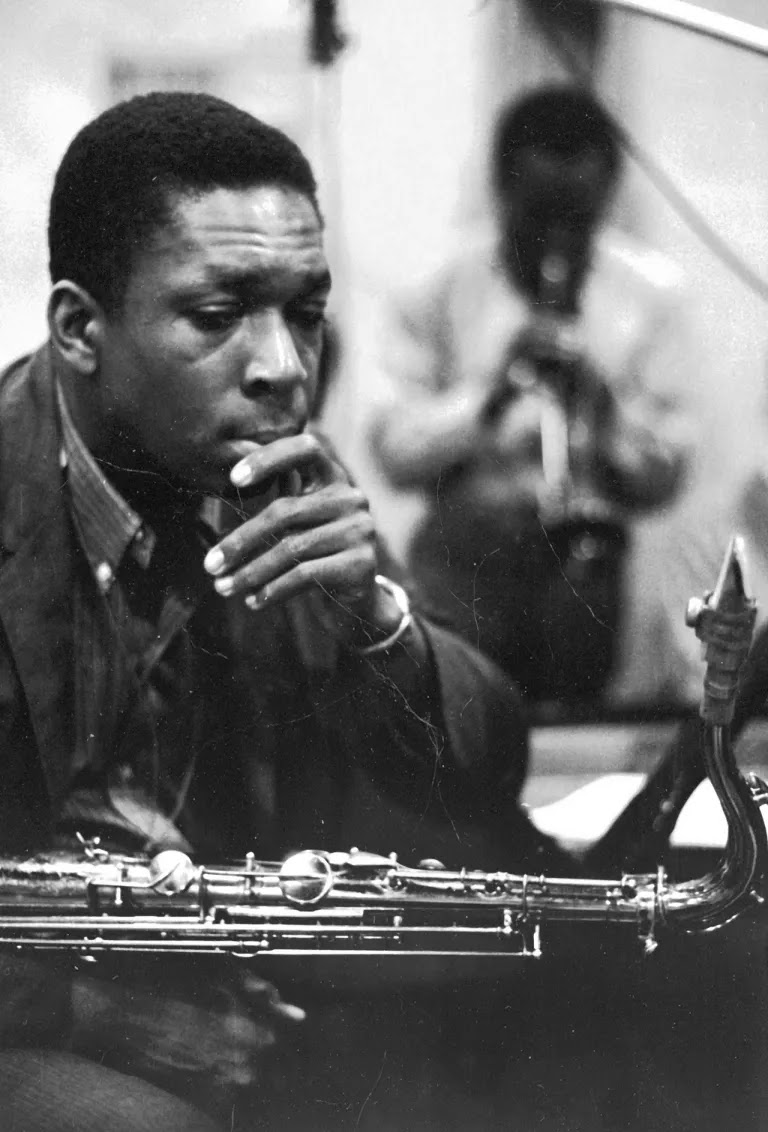
Miles Davis’ band settled on the lineup known as the “First Great Quintet” in 1955, when a 29-year old John Coltrane replaced Sonny Rollins in September of 1955. This famed band launched many superstar careers, but this particular lineup would craft a series of recordings that would define an era of music. After expanding to a sextet format with the addition of Cannonball Adderley, the album Kind Of Blue was released in 1959 and is regarded as one of the greatest albums of all times, irrespective of genre.
The First Great Quintet emerged from Rudy Van Gelder’s studio in Hackensack, NJ, with a set of essential recordings that are every bit as essential and canonical to the musical tradition. John Coltrane was beginning to make his mark on the musical world, his star on the rise following a series of performances and recordings alongside Thelonious Monk, further assisted by his association with Miles, which would serve in introducing his generational talent to a larger listening audience.
Singing The Solo, Learning The Tune
The tune Four is a well-known standard that is commonly called at jam sessions. It was actually the first tune I heard called at the very first jam session I went to in Chicago.
The first of many recordings of Four that Miles Davis would lay down in his career was captured in 1954. But to hear John Coltrane’s solo, we’ll need to look ahead to Workin’ With The Miles Davis Quintet, which was released on Prestige in early 1960 and comprised recordings from two sessions in 1956.
This song is a perfect template of what makes a great jam session tune: changes that are fun to play over, accessible to players of all levels but still interesting to advanced players, a great melody; according to at least one musician I’ve shared the bandstand with, it’s “the greatest tune ever written”.
The form of the tune follows an ABAC structure. The melody over the B and C sections borrows a melodic idea from Tadd Dameron’s ballad If You Could See Me Now, which is one of my favorite tunes as well. Reportedly, Tadd found inspiration for this melodic figure in If You Could See Me Now from an outro that Dizzy Gillespie had played over Groovin’ High, another essential tune in the bebop tradition.
The Transcription
You can view and download my PDF copy of the transcription. This is for educational purposes only, to give you a chance to compare the results of your own transcription practice.
Parting Wisdom
We’ll be working on more transcriptions and they will always be posted on my site when they’re finished and uploaded. In the pursuit of quality, I will occasionally update and revise the solos when errors are discovered, or as I continue to hone my engraving skills.
The next solo I’ll be posting is one of my favorite musicians, Lester Young’s solo from the 1936 classic cut Oh, Lady Be Good.
Stay tuned for that, and even more great saxophone content.
Please Donate!
If you find my work to provide a benefit to your musical studies, please consider making a donation so I can keep making these solos available.
 Matt Mrozinski